Can you use a tablet as a remote for a TV?
Yes, you can use a tablet as a remote for a TV in many cases, especially if you have a smart TV, streaming device, Android TV, Google TV, Apple TV, Fire TV, Roku, or a TV connected to a set-top box. The best method depends on your TV model, your tablet, and whether both devices support the same control app, Wi-Fi network, Bluetooth, or infrared. This guide explains the practical options, setup steps, limitations, and fixes so you can choose the easiest way to control your television from a tablet.
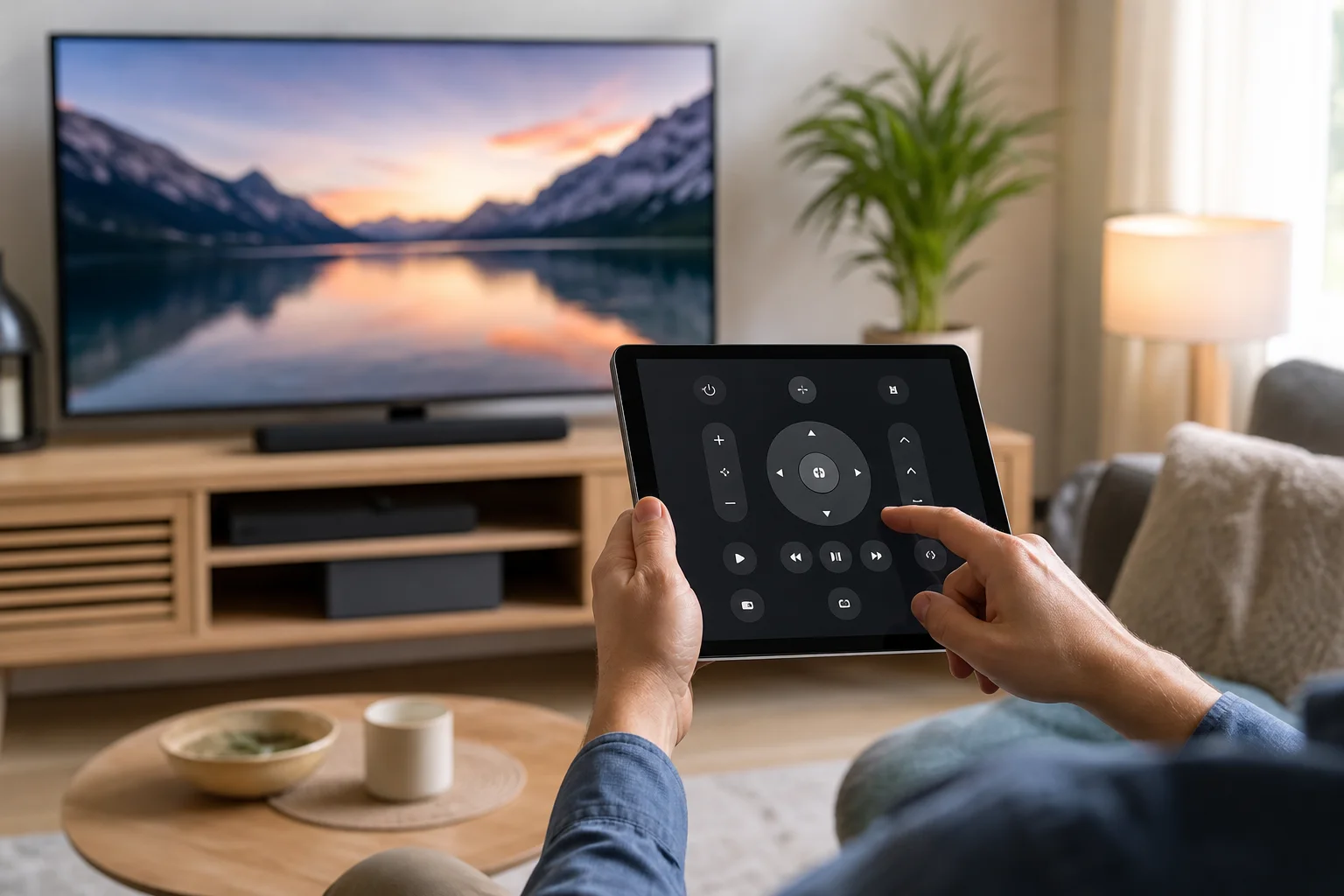
How a tablet can control a TV
A tablet can work as a TV remote in several different ways. Some methods use your home Wi-Fi network. Others use Bluetooth, infrared, or a device-specific app. The right option depends on the hardware you already own.
The most common control methods are:
- Smart TV apps: Apps from Samsung, LG, Sony, TCL, Hisense, Philips, and other brands can control compatible TVs.
- Streaming device apps: Roku, Fire TV, Apple TV, Chromecast with Google TV, and similar platforms offer remote-control apps.
- Universal remote apps: Some apps can control multiple brands, usually over Wi-Fi or infrared.
- Infrared blaster: A few Android tablets include an IR blaster, which can mimic a traditional remote.
- Smart home apps: Google Home, Apple Home, and Amazon Alexa can control supported TVs and media devices.
In most modern homes, Wi-Fi control is the simplest route. Your tablet and TV must usually be connected to the same network. Once paired, the tablet sends commands through the router instead of using a direct infrared beam.
What you need before you start
Before installing apps, check a few basics. This saves time and avoids common pairing problems.
You will usually need:
- A smart TV or a streaming device connected to the TV
- A tablet running a current version of Android, iPadOS, or Fire OS
- The official TV or streaming device app
- Both devices connected to the same Wi-Fi network
- Bluetooth enabled, if the app requires it for pairing
- The TV powered on for first-time setup
If your TV is older and not connected to the internet, you may still be able to use a tablet with an IR blaster. However, most iPads and many newer Android tablets do not include infrared hardware. In that case, a streaming stick or smart hub can make tablet control possible.
Best ways to use a tablet as a TV remote
Different setups offer different levels of control. The table below compares the most useful options.
| Method | Best for | Requirements | Main limitation |
|---|---|---|---|
| Official TV brand app | Smart TVs from major brands | Same Wi-Fi network and compatible TV | App support varies by model and region |
| Streaming device app | Roku, Fire TV, Apple TV, Google TV | Tablet app and paired streaming device | Controls the streaming device, not always all TV features |
| Google Home or Apple Home | Smart home users | Compatible TV or media device | Some commands may be basic |
| Infrared remote app | Older non-smart TVs | Android tablet with IR blaster | Requires line of sight and supported IR codes |
| Universal Wi-Fi app | Mixed devices | Compatible smart TV or set-top box | Quality and privacy vary by app |
For most people, the official app from the TV or streaming device maker is the safest and most reliable choice. It is also less likely to show intrusive ads or request unnecessary permissions.
How to set up a tablet as a remote for a smart TV
Use this step-by-step process if you have a smart TV from brands such as Samsung, LG, Sony, TCL, Hisense, Vizio, Philips, or Panasonic.
- Connect the TV to Wi-Fi. Open the TV network settings and connect it to your home router.
- Connect the tablet to the same Wi-Fi network. Avoid using mobile data or a guest network during setup.
- Install the official app. Search the App Store, Google Play, or Amazon Appstore for your TV brand’s remote or smart TV app.
- Open the app and scan for devices. The app should detect compatible TVs on the same network.
- Select your TV. Tap the TV name when it appears.
- Confirm pairing on the TV screen. Many TVs show a PIN code or pairing prompt.
- Test basic controls. Try power, volume, input, home, navigation, and playback buttons.
- Enable extra features if needed. Some apps offer keyboard input, touchpad navigation, voice search, or screen casting.
If the app cannot find your TV, restart the TV, tablet, and router. Also check that network discovery, local network access, or nearby device permission is enabled for the app.
Using an iPad as a TV remote
An iPad can work well as a TV remote, but it usually relies on apps and Wi-Fi rather than infrared. iPads do not have a built-in IR blaster, so they cannot directly replace a traditional infrared remote for an old TV.
Good iPad remote options include:
- Apple TV Remote in Control Center: Best for Apple TV and many AirPlay-compatible setups.
- Roku app: Useful for Roku TVs and Roku streaming players.
- Amazon Fire TV app: Works with Fire TV sticks, Fire TV Cube, and Fire TV smart TVs.
- Google Home app: Controls Chromecast and compatible Google TV devices.
- TV brand apps: Useful for compatible smart TVs from many manufacturers.
For Apple TV, the iPad experience is especially smooth. You can navigate, type passwords with the iPad keyboard, use Siri where supported, and control playback without hunting for the physical remote.
Using an Android tablet as a TV remote
Android tablets offer broad remote-control support. They can control Android TV, Google TV, Chromecast, Fire TV, Roku, and many smart TVs through apps. Some older or specialized Android tablets also include an infrared blaster, which gives them an advantage with older televisions.
Common Android options include:
- Google TV app: Controls Android TV and Google TV devices.
- Google Home app: Manages Chromecast and smart home devices.
- Roku app: Controls Roku players and Roku TVs.
- Fire TV app: Controls Amazon Fire TV devices.
- Manufacturer apps: Control compatible TVs from specific brands.
- IR remote apps: Work only if the tablet has infrared hardware.
If your Android tablet has an IR blaster, you can often set it up like a universal remote. Choose your TV brand in the app, test several codes, and save the one that works. However, if your tablet lacks IR, no app can add infrared control by itself.
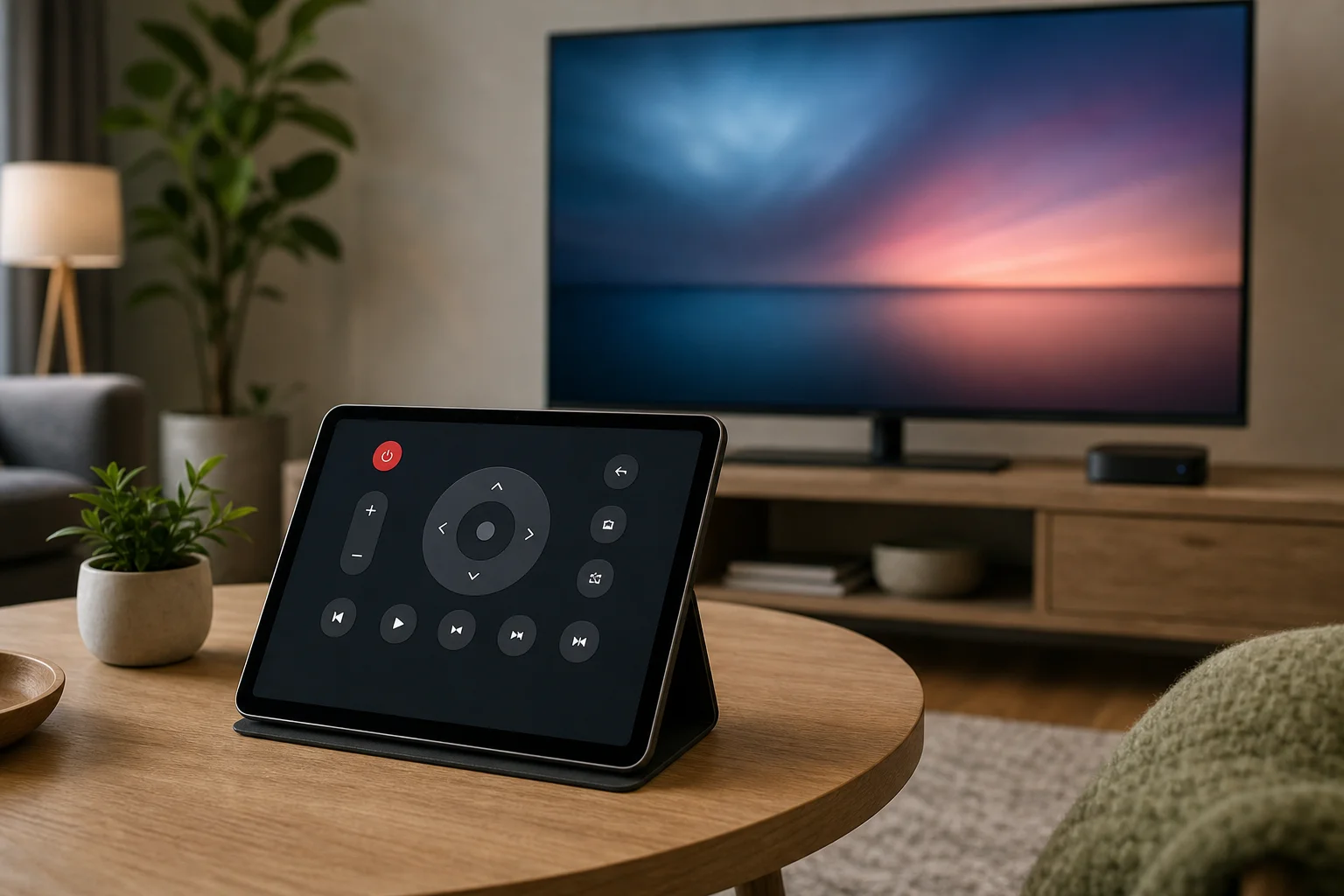
What functions can a tablet remote control?
A tablet remote can often do more than a standard remote. The exact features depend on your TV and app, but many setups support:
- Power on and off
- Volume and mute
- Channel changing
- Input switching
- Menu navigation
- Playback controls
- Voice search
- Text entry with the tablet keyboard
- App launching
- Private listening through headphones, on some platforms
- Casting photos, videos, or music
Keyboard input is one of the biggest benefits. Typing email addresses, Wi-Fi passwords, and search terms is much faster on a tablet than with arrow keys on a standard remote.
However, some functions may remain limited. For example, certain apps cannot power on the TV if the TV is fully shut down and disconnected from the network. In that case, enable settings such as “wake on LAN,” “quick start,” or “mobile device control” if your TV supports them.
Common problems and quick fixes
Tablet remote apps are convenient, but they can fail when network settings or permissions get in the way. Try these fixes first.
The tablet cannot find the TV
Make sure both devices are on the same Wi-Fi network. If your router has separate 2.4 GHz and 5 GHz names, connect both devices to the same one during setup. Also avoid guest networks, because they often block local device discovery.
Pairing fails or the PIN does not appear
Restart the TV and open the app again. Then check whether the TV has a setting for mobile control, remote app access, or external device control. Enable it and retry pairing.
The remote works slowly
A weak Wi-Fi signal can cause lag. Move the router closer, restart it, or connect the TV by Ethernet if possible. Also close unused apps on the tablet.
The power button does not turn on the TV
Many TVs can only be turned on by app if a standby network feature is enabled. Look for settings such as quick start, network standby, wake on LAN, or power on with mobile device. If your TV does not support this, you may need the original remote or a physical button to turn it on.
The app asks for too many permissions
Be cautious with third-party universal remote apps. A remote app may need local network access, Bluetooth, or microphone permission for voice control. It should not need unrelated permissions such as contacts or precise location for basic remote functions.
Privacy and security tips
Because a tablet remote app can access devices on your home network, choose apps carefully. Prefer official apps from the TV brand, streaming device maker, or platform provider. Keep the app updated, and remove apps you no longer use.
For better security:
- Download apps only from trusted app stores.
- Check the developer name before installing.
- Review app permissions after setup.
- Keep your TV firmware updated.
- Use a strong Wi-Fi password.
- Disable remote access features you do not need.
These steps reduce the risk of unreliable apps, unwanted tracking, and connection issues.
FAQ about using a tablet as a TV remote
Can I use any tablet as a remote for any TV?
No. Compatibility depends on the TV, tablet, and control method. Smart TVs and streaming devices are usually easier to control by tablet. Older TVs may need an infrared-equipped Android tablet or a separate universal remote hub.
Can a tablet replace a lost TV remote?
Yes, in many cases. If your TV is already on Wi-Fi, you can often install the official app and pair it. If the TV is not connected to the internet and you cannot access its settings, you may need a physical remote, IR blaster, or universal remote first.
Do I need Wi-Fi to use a tablet as a TV remote?
Usually, yes. Most tablet remote apps use Wi-Fi. Some setups use Bluetooth for pairing or control. Infrared control does not require Wi-Fi, but the tablet must have an IR blaster.
Can I control volume with a tablet remote?
Often, yes. Smart TV apps and streaming device apps commonly support volume control. However, if your sound comes from a separate soundbar or receiver, you may need an app or setup that can control that device too.
Is a tablet remote better than a normal remote?
It can be. A tablet offers a large touch screen, keyboard input, voice search, and app shortcuts. On the other hand, a physical remote is simpler, faster to grab, and works without charging a tablet.
When a physical remote is still better
A tablet is a useful backup or upgrade, but it is not perfect for every situation. A physical remote is often better when you need instant access, tactile buttons, or reliable power control. It also works when Wi-Fi is down.
For families, it may make sense to use both. Keep the regular remote near the TV for basic control. Use the tablet when you need easier typing, streaming app navigation, casting, or advanced features.
Conclusion
You can use a tablet as a remote for a TV if your devices support the same app, network, or infrared method. Start with the official app for your smart TV or streaming device, connect both devices to the same Wi-Fi network, and complete pairing on the TV screen. If that does not work, check permissions, network settings, and standby power options. Try the setup today, and keep your tablet ready as a practical backup or a more comfortable remote for everyday viewing.